

After 5 years, the Australian Grand Prix returns to kick off the Formula 1 season. Albert Park had been absent for two years (2020 and 2021) due to the Covid-19 pandemic and was replaced by the Bahrain Grand Prix as the season opener.
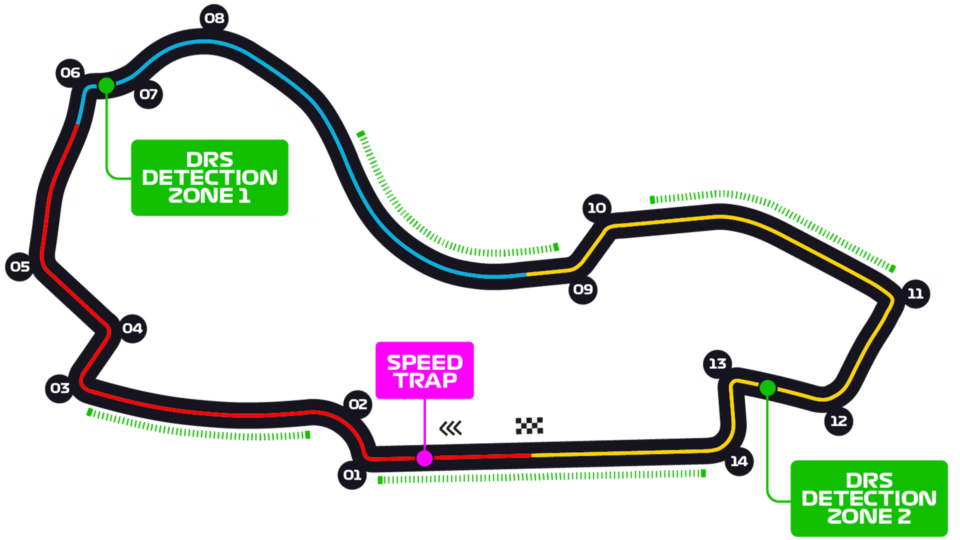
This weekend, we will witness the first 306.124 km that the drivers will cover during the 2025 season. The track is 5.278 km long, with 14 corners and a total of 58 laps.
Technical Analysis of the Australian Grand Prix
Albert Park is a very technical circuit: it features medium and high speed corners, which require a good amount of downforce. However, these aren’t the only peculiarities of the track. The final sector is filled with low-speed corners, where good traction on corner exit is crucial.
Given these characteristics, the track would typically require high aerodynamic downforce. However, the presence of several straights, including three zones for DRS, complicates this. More specifically, choosing the right rear wing (and even the beam wing) is challenging, as teams must find an optimal compromise or sacrifice one aspect.

With Alberto Fabrega’s photos, we can analyze the choices made in the previous edition:
The top teams opted for a medium-downforce setup, while towards the back of the grid, we see an increase in downforce levels. This choice compromises straight-line speed (despite greater DRS efficiency). Opting for a higher downforce setup may have also been influenced by tire management considerations.
Pirelli’s choice of tyres
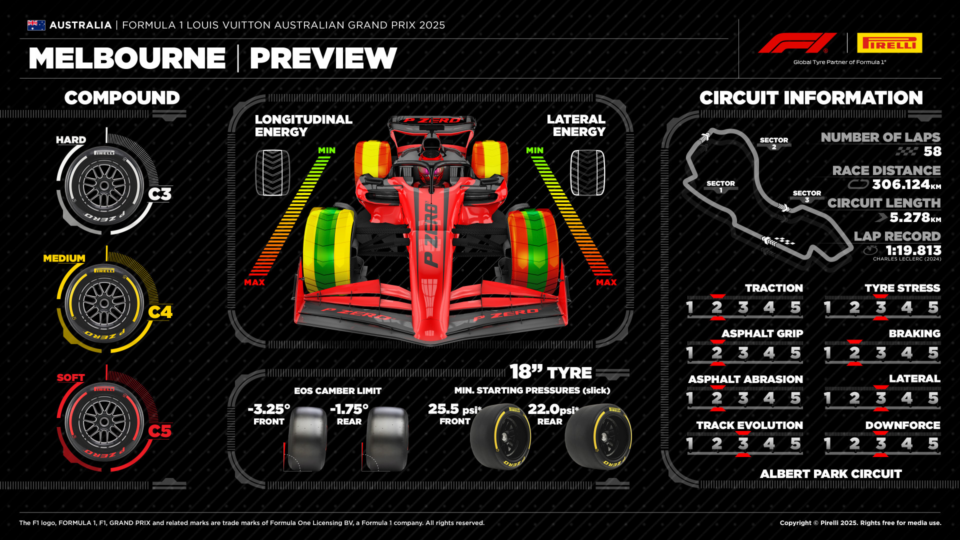
The Australian circuit itself is not a major threat when it comes to tire management. The track’s asphalt has low abrasiveness, which means lower tire wear, but it also reduces grip. This explains Pirelli’s decision to bring the softest tire compound.
However, the other characteristics of the circuit make it more challenging. The medium/high speed corners, along with the traction required when exiting the corners in the final sector, put the Pirelli tires to the test.
Though less significant, the right-hand corners place more strain on the left-side tires, especially the rear one, which is also subjected to traction when exiting corners.
The circuit hosting the season opener is considered front-end friendly.
However, it can be troublesome for teams with an unstable rear end, like McLaren, as stated by Lando Norris himself. With good setup work, though, these issues can be addressed.
For teams like Mercedes and Ferrari, the Australian GP can be beneficial, providing more time to solve the issue of front-end instability.
Weather forecast for Australian Grand Prix

The first Grand Prix of the year could bring plenty of surprises. While free practice and qualifying are not at risk of rain, the race might be. As shown in the image, the city of Melbourne appears to be affected by rainfall.

Even with the meteogram provided by Meteoblue, the risk of rain remains very high.
Stay updated on weather forecasts and all things Formula 1 by following us on our social media don’t miss a thing!
Photo Credit: F1, Alberto Fabrega, WxChart, MeteoBlue.


